


This article is going to appear like a detour from my usual musings. It isn’t. HHS hosted their first women’s health conference last month — I went for the policy. But somewhere between the panels and my second pinot, I found myself asking a different question entirely, and I haven’t been able to stop turning it over since: What does it mean to be a woman in 2026?
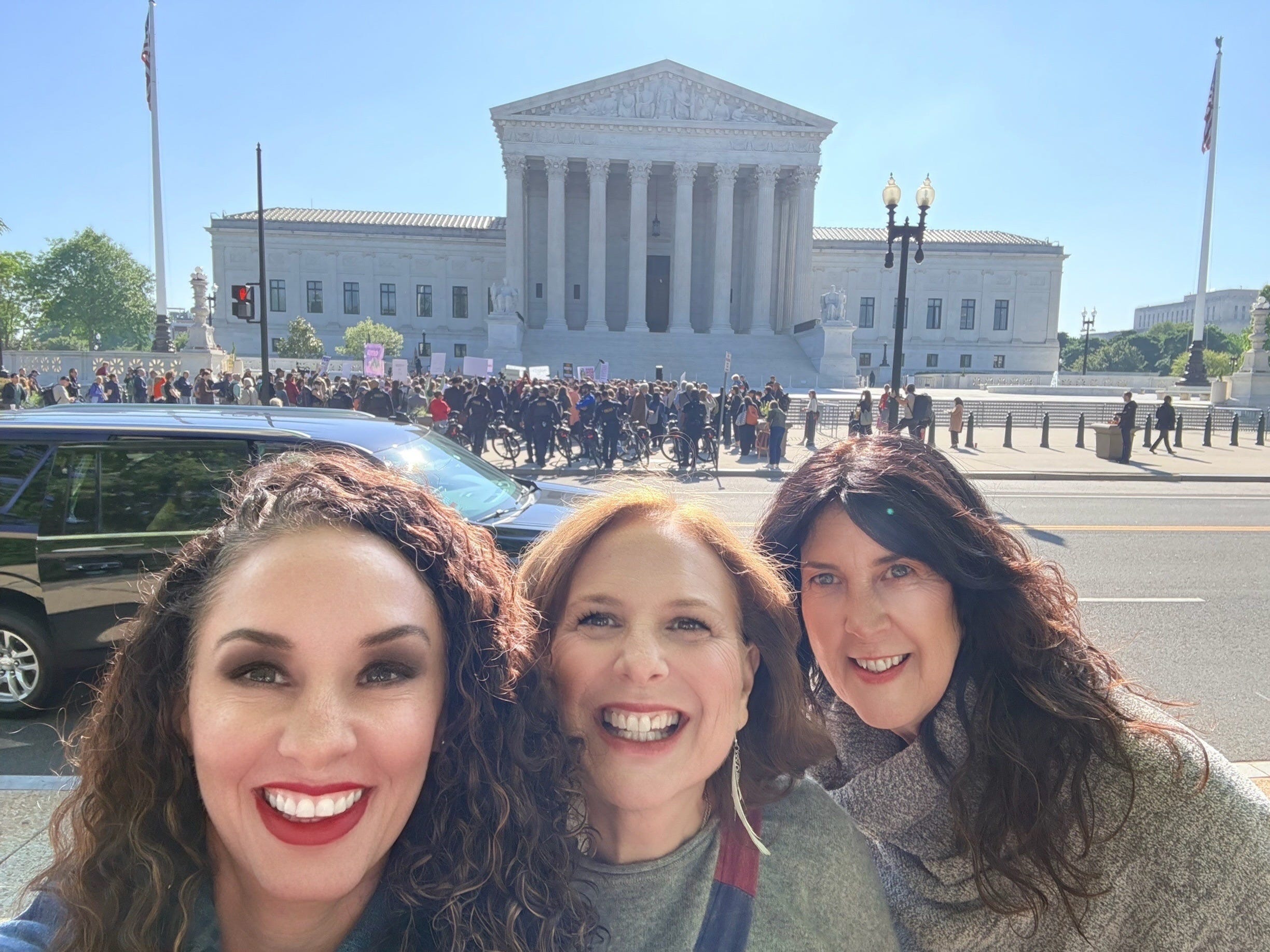
More recently than I’d like to admit, I walked into a women’s garden party expecting the usual.
(Ladies, you’ll recognize this.)
Lean in. Slay. Grind. And then collect those awards because, you know, you deserve it (or something). Just never admit that you have panic attacks and still cry in the shower on Sundays.
(Hi, I’m Tiffany, and I’ve attended approximately four hundred of these events.)
I’d been introduced to the host halfway across the country by a mutual friend. After one breakfast, two hours, and three coffees, I was hooked. Undeniably smitten and insatiably curious.
This woman was different — outspoken, confident, smart, captivating. The kind of woman you meet and immediately think: I don’t know why, but I need to be in her orbit.
She had a résumé that would make D.C. strivers cry tears of inadequacy in their leased European imports. But more than that, she projected an energy and a presence that made her résumé entirely irrelevant.
When she invited me to her home, I cleared my calendar and showed up — not really for the networking, but for her.
Enthusiasm aside, I was bracing myself for disappointment. I’ve known women like her. Women who’ve climbed that high always only have one sermon. It’s always the same one. And it’s awful.
So I had a plan. Hide my real self for as long as I could. Avoid excommunication before the appetizers. Try not to let any of my thoughtcrimes escape.
Namely, that I like being a woman. That men and women are different, not in a “bless her heart she’s confused” way, but in a biological, observable, not-up-for-debate way. That motherhood didn’t cage me, it elevated me. That I’m not a victim of my sex. And that if anyone’s getting a raw deal in this culture right now, I think it might be men (not us).
I’m not great at deception. I knew some piece of me would escape and she’d see someone who was not, and never would be, on her level. Someone weak. Someone who couldn’t evolve.
I hoped to push that eventuality as far into the future as possible.
She gathered us outside. A dozen women, organic herbal tea and gourmet chocolates in hand — and I settled in for the sermon I’d heard a hundred times.
I had my face ready. So ready. You know the one that says oh yes, absolutely, so empowering while your brain checks out and does something useful.
But the sermon never came.
Instead, she said women were falling apart. That we’d walked away from the most powerful thing about ourselves voluntarily because someone convinced us it was beneath us. She said the feminine roles we’d abandoned weren’t cages, they were where our power lived. And in our haste to win at girl-bossing or simply to keep the lights on and survive, we’d thrown our femininity directly into the garbage and lost our peace. We traded intuition, connection, and depth for the chance to prove ourselves in a masculine arena — fighting endless battles in corporate boardrooms and wondering why we were exhausted, empty, and had nothing left to give.
Not only had she thought the unthinkable, she’d said it out loud.
Unapologetically. In public.
I’d been running away from this knowing for years. I’d carried this feeling around secretly like it was something that made me the wrong kind of human. The wrong kind of woman. Someone wholly unworthy of mothering daughters.
I’d never been able to express it in words or even understand it fully, until someone who had already won all the masculine games I was still playing, sitting in a seat I wanted, with accomplishments I respected, from a life that I admired, said it out loud.
She said it plainly. Like it was obvious. Like it wasn’t crazy. Like it wasn’t something to whisper.
And in that moment, something in me broke.
Because she wasn’t just describing the world as she saw it. She was describing everything that was still wrong in my life.
The Programming
Here’s what feminism had actually installed in me personally.
Whatever needed doing (bills, decisions, the mental load of a household, the emotional weather of every relationship, the logistics of children and work and a life) had to be entirely on me. Not because help was unavailable, but because accepting help was shameful.
I had to do it all. By myself.
I had to make more money than the man I was with. I had to be the fittest and the prettiest. The one who remembered the appointments, packed the bags, noticed when the kids were off, managed the holidays, hosted the family, tracked the supplements, answered every email within the hour, and held the line on every standard in the house I’d silently set for myself. I had to demonstrate, every single day, that I could carry the entire weight of a life (well many lives, actually) — financial, emotional, logistical, spiritual — without flinching. Without asking. Without needing anything from anyone.
And THAT was the only way I could maybe one day be “enough.” But of course “enough” wasn’t achievable. In fact, “enough” wasn’t even definable.
There was no income, no title, no completed checklist, no inbox at zero, no beach body, no clean kitchen at midnight that would make me feel safe. And I had come to the conclusion that there never would be.
Not because I’m impossible to satisfy. (I mean, a little. But that’s normal, right?) But because at the end of every “enough” I could earn all by myself, I was still alone. Wholly responsible for my own safety, stability, peace, sanity and companionship. A position I am not (and will never be) comfortable in.
So what the heck was I supposed to do?
It felt hard and impossible. And not because I have a deep-seated self-esteem problem. Because no amount of winning was ever going to get me the thing I actually wanted: to be cared for, accepted and loved. To be poured into. To be held up by something larger than my own grip.
If, in my nature, true safety required the love and participation of others — a partner, a community, God — then by definition there was no destination I could reach that would let me exhale. None. Not a business, a body, a bank account or some sort of optimized morning routine. Not a perfectly run household.
No version of self-sufficiency was going to deliver the thing I actually needed.
And nobody’d ever told me that.
Nobody ever said the prize at the top of the ladder isn’t even the thing you’re looking for — and when you finally get to the top, there’s just more ladder.
All the while, the people in my life were behind me saying things like, let me take care of it. Do less. Breathe more. Sit down. Let me bring you dinner. Let me watch the kids. Let me make the phone call. Let me put a good word in for you. Let me help.
And I could. not. do. it.
I could not receive. Not from my partner or my friends or my family or even from God.
I’d internalized (down in my marrow) that needing anyone made me weak. That accepting made me a user. That a woman who lets others provide aid or comfort has already lost some invisible game, I didn’t even realize I was playing.
So I kept grinding.
Through the panic and the sleepless nights. Through the missed dinners and the canceled coffee dates. Through the loneliness of the “only-me”. Through the slow, draining of every soft thing about me.
And it cost me almost everything.
Patience. Joy. Energy. Intuition. Connection. God.
Softness, warmth, and the ability to feel — every feminine gift I’d been given got burned as fuel to keep my independence-engine running.
I was so busy proving I didn’t need anyone that I became someone I didn’t recognize. And I robbed the people who loved me of the chance to actually love me.
My partner couldn’t be what he wanted to be, a man who provides. My friends couldn’t be what they wanted to be, women who show up. God couldn’t be what He’s always been, a Father who takes care of His children.
Because I wouldn’t let any of them in.
My refusal to receive wasn’t protecting me. And it wasn’t protecting any of them. I was just hollowing out every relationship I had, and pretending I was doing everyone a favor.
Over time, the best parts of me just started dying.
What They Actually Did to Us
There is a distinction — and it matters — between having the ability to make money or take care of others, and protect your tribe and yourself, and having the mandate that this must be your highest calling for your entire life.
First-wave feminism understood this. It said: women should be able to vote, own property, work, earn, and not be treated as their husband’s legal furniture. That was (mostly) righteous.
But somewhere between suffrage and the present moment, the movement crossed a red line it never came back from. It stopped saying “women should have access to spaces” and started saying “masculine spaces are the only ones that matter.”
Motherhood got demoted.
Community got demoted.
Nurturing got reclassified as “internalized oppression.”
The woman who wanted to raise her children and tend her home and build the emotional life of a family and a community wasn’t making a choice — she was making the wrong choice. The consolation-prize choice. The choice of a woman who couldn’t cut it. And the woman who let her husband handle the bills, or her mother take the kids for the weekend, or her best friend bring her dinner when she was drowning — she wasn’t winning either. She was weak.
Modern feminism took the masculine standard — career achievement, economic output, public recognition — and declared it the only scoreboard that matters. Then it sent women onto a field we didn’t design to play a game we weren’t designed for, didn’t invent, didn’t even want to play in many cases, and tracked our performance on a board that doesn’t even have a column for the things we’re extraordinary at.
Feminism told us the only way to be a powerful woman was to embody a poorly-designed imitation of man with no team, no support, and no one to come home to.
But, in fact, women are not men. And that’s exactly what makes us special.
Women are uniquely positioned to feel and intuit — for themselves, for their partners, for their children, for the world — in ways that men simply can’t (or don’t) at least not as often.
It’s not a soft skill. It’s not a nice-to-have. It is a force that elevates every single person it touches. It’s what calls men to sacrifice their lives in order to protect us.
But that force can’t operate at full power when the woman carrying it is exhausted from trying to fulfill a role she was never designed to fill and forbidden from accepting the help that would let her sustain it. Eventually she runs out. She becomes the opposite of everything she was meant to be.
The woman who can’t receive becomes the woman who can’t give, not really anyway.
She becomes brittle and resentful. Angry and disconnected. Exhausted in a way that leaks out sideways at everyone around her.
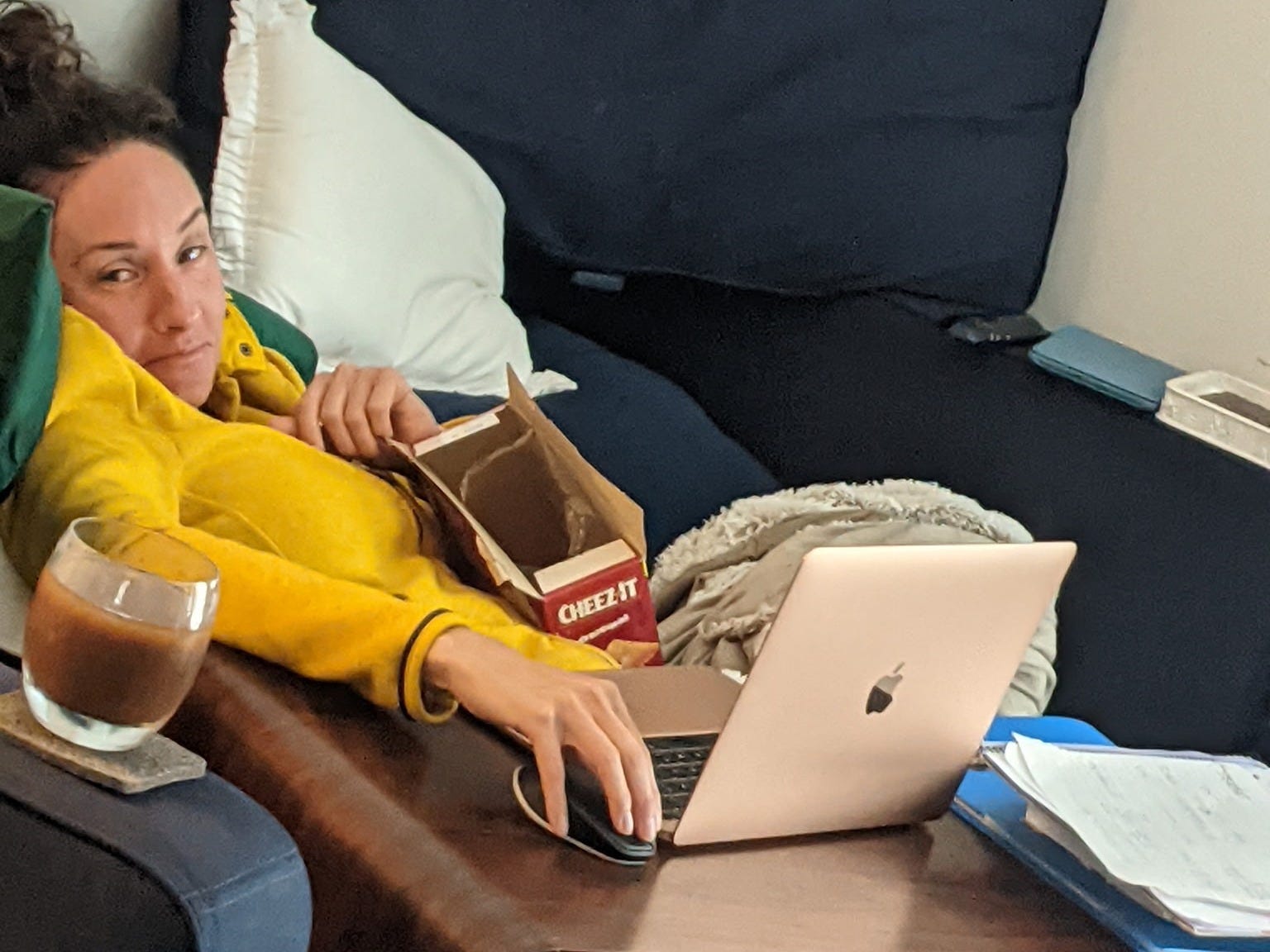
She ages at 2x speed — snapping at her husband, being short with her kids, unavailable to her friends, and increasingly ineffective at work. She’s unable to be present in a room because half her brain is running the checklist of everything she still has to do alone tonight.
She becomes miserable and insufferable.
(And then she’s shamed for that too. Ask me how I know.)
When we can’t take care of our whole selves, we can’t feel whole.
We can’t relax into our bodies in a way that makes room for family, for the desire for sex, the desire to have children, for the desire for more. Chronic stress disrupts fertility in ways we don’t talk about enough. Because you cannot live in fight-or-flight and be open to creating (or nurturing) life at the same time.
Perhaps that’s why feminism told women their fertility was an obstacle to their “freedom.”
And the data confirm what our bodies already know:
In 2009, economists Betsey Stevenson and Justin Wolfers published a study through the National Bureau of Economic Research called “The Paradox of Declining Female Happiness.”
Over 35 years, as women gained more education, more income, more legal protection, more professional opportunity — everything the movement promised would set us free — women’s happiness declined. In absolute terms. And relative to men’s. In the 1970s, women were happier than men. By the late 2000s, that had reversed.
A 2024 study in the Journal of Population Economics found that women report worse mental health than men consistently across multiple measures of depression, anxiety, and negative affect.
We got everything feminism promised us —
And now one in four of us age 40+ are medicated (on antidepressants) to live through the result.
What We Left Behind
Women have a form of power that doesn’t photograph well, doesn’t go on a résumé, and doesn’t have a scholarship named after it.
The power to emotionally attune. To spiritually anchor. To build and hold the relational bonds that keep families from falling apart. To transmit culture and values and meaning across generations. To create the environment — in a home, a family, a community — where small humans become whole ones.
It’s women who remember the birthdays. Who set the table. Who show up with food when someone is sick, who remember that the neighbor’s husband just died and the new mom down the street hasn’t slept (or showered) in weeks. We are the connective tissue of civilization.
That work is the most important work in any civilization.
Everything else — the economy, the government, the institutions — it’s all downstream of the humans who were raised by someone present enough and whole enough to do it.
Let me be clear about what I’m saying:
Everything we create as a society is ultimately for the purpose of supporting society’s most important work — the formation of a community that supports the raising of whole human beings.
Feminism didn’t just move women away from that work. It shamed us for wanting it. It built a culture where a woman who says “I want to raise my children and build a home” has to deliver that line like she’s entering a guilty plea. It shamed her. It made her a loser.
And eventually it left the post vacant. Because nobody filled it. Nobody could.
But it also did one more thing. It taught us that the connective tissue runs in only one direction… out. The same woman who shows up with food when someone is sick is never supposed to be the woman who lets someone show up for her when she is. The web only works if everyone in it is willing to be both ends of the rope. And we were trained to refuse one end of it entirely.
So we became the giver who never receives. And the giver who never receives doesn’t stay generous for long, because she can’t. So she starts keeping score in a marriage that was never supposed to have a scoreboard. She abandons her people, because she’s out of care to give. She brings her darkness home and lets it leak out all over the people she loves the most.
The childhood mental health crisis. The loneliness epidemic. The collapse of community. Marriages disintegrating. Wives running to TikTok to shame their men for not unloading the dishwasher. An entire generation being raised by screens because both parents are too depleted to be present. It’s all the predictable result of telling women to get out there and do everything on their own.
We look at the wreckage now and we act stunned, as if the consequences are some great mystery.
But they’re not a mystery. We left. We refused help. We abandoned the work that only we could do. Even the work we kept, we did on fumes — and the whole thing started falling apart right on schedule.
The Way Back (From Inside It)
I want to be honest. I have not arrived. I am not writing this from the other side with a neat little bow on my feminine transformation. I’m writing this from somewhere in the messy middle.
That amazing woman in D.C. didn’t tell me to quit my job and disappear into some caricature of domestic life.
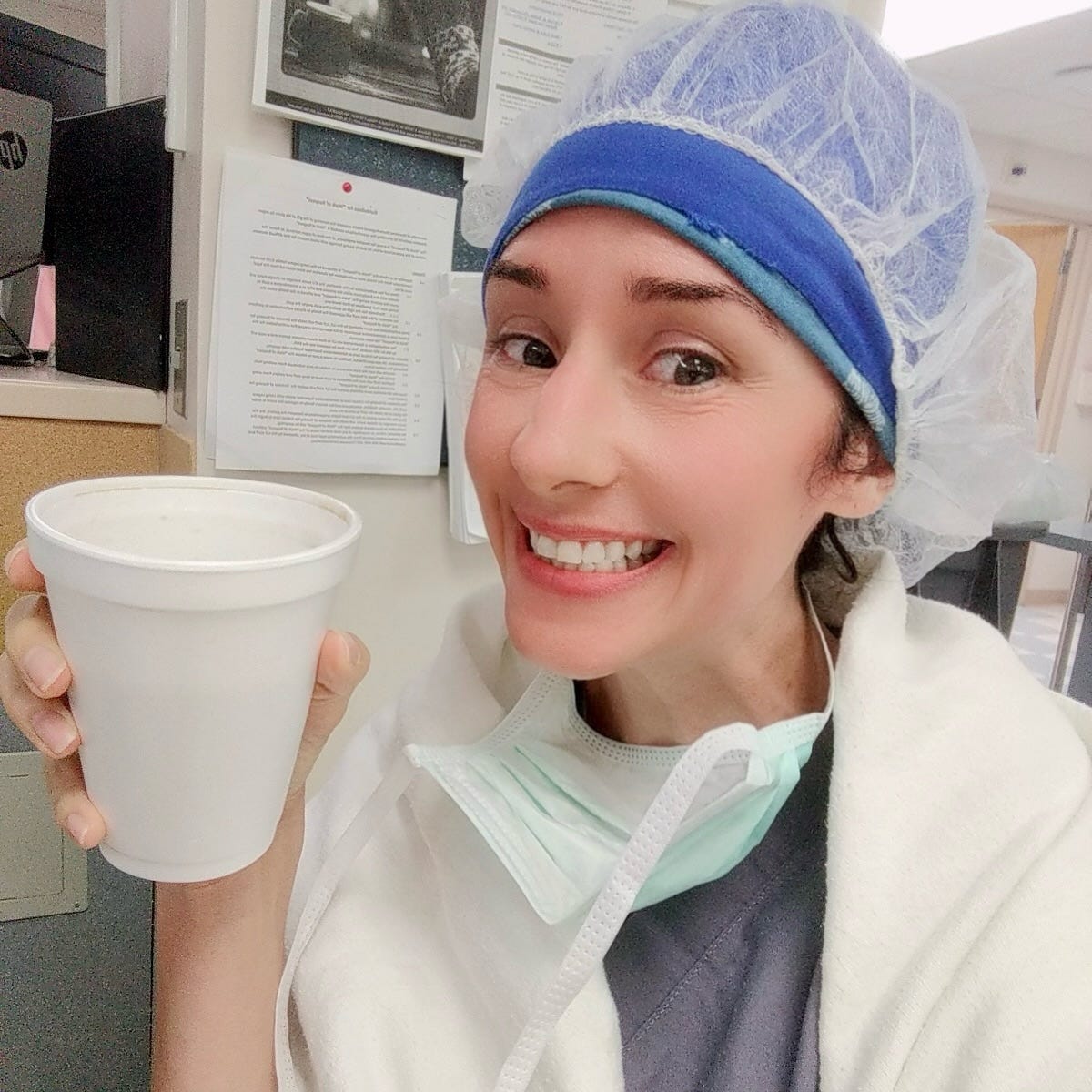
I run a business. And I’m really good at it. I work with voices shaping this country —brilliant people who need my skills so they can keep changing history, while I help set the narrative. I build the relationships that get them in the right rooms and on the right screens. I write the words that help them change how ordinary people think about their health, their government, and their lives. That work matters. It’s the work the Lord has called me to.
I’m not asking anyone to go back to 1954. Because not every woman wants that. But the ones who want to be mothers, who want to receive care, who want to build a community and a home alongside a career or instead of one — deserve to want that and pursue it without shame.
What that DC powerhouse taught me was far more dangerous than any of that.
She taught me that the feminine is not a limitation to be overcome. It’s the most powerful thing about me. And she taught me something else — that letting other people in IS the feminine. That receiving IS the power. I’d been tricked into laying down the most powerful thing because someone convinced me it was something to be embarrassed by. And that if I wanted to become the biggest, most powerful version of myself: I had to learn to receive.
So I started listening to the thing I’d been ignoring my whole life — my intuition.
That knowing that had been there all along, buried under the grinding and the proving and the performing.
And trusting it felt sort of like saying “yes” to God.
Not in a church pew kind of way, but in an everyday life kind of way. It feels like clarity. I could suddenly see the design… men and women as different on purpose, not by accident, and women as the creators of the social fabric of the environment where we can all thrive.
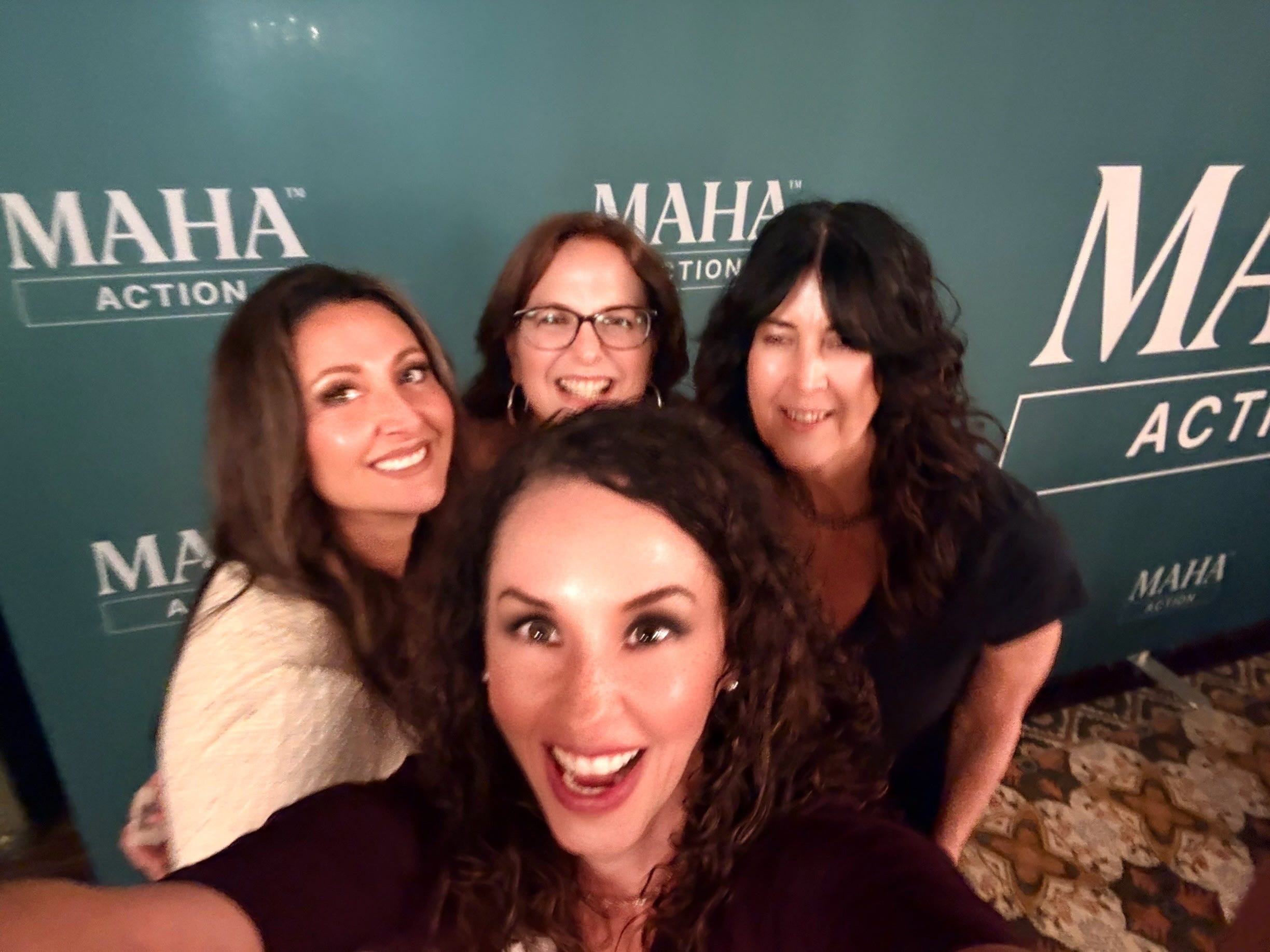
Months after that garden party, she made a call on my behalf. Said my name in a room before I’d earned the right to be in it. She opened doors I hadn’t knocked on yet.
My first instinct was immediate and automatic: figure out how to pay her back. Quantify the debt. Earn it retroactively. Make absolutely sure nobody, including her, including me, could conclude that I ever needed help.
But I didn’t do any of that.
Instead, I said thank you. And I let it go (at least as best I could).
It sounds small, but it isn’t.
The woman who told me the truth about feminism over organic tea and good chocolate then demonstrated, without commentary, what a non-transactional feminine interaction actually looks like. She didn’t need me to zero out the ledger. She just wanted to be useful to someone she believed in.
And I have to learn how to let that be enough.
The programming doesn’t delete itself overnight. But the intensity of those feelings has diminished. And that’s progress.
More and more, I’m realizing that modern feminism didn’t free us.
It told us that we had to be something we should never be — a woman who faces life’s wins and struggles alone. And while we were busy proving we could do what men do, alone, we lost the ability to do what only we can do, together.
The wreckage isn’t theoretical — it’s in the happiness data, the divorce filings, the fertility clinics, and the faces of women who were promised they could have it all and ended up wondering why victory tastes like burnt garbage.
The answer isn’t going backward, because, well — it never is.
But the answer could be going deeper into the gifts and the power that were always ours, into community and love, into giving AND receiving, before someone convinced us to trade them for a seat at a table we didn’t build and didn’t really want to sit at.
I almost lost everything listening to the lie. God and the women who told me the truth pulled me back from a demise I’d carefully, proudly, painstakingly designed for myself.
And all I can say is I’m freaking grateful.
If this hit you somewhere real or if you read your own story somewhere in mine, please send it to a woman who needs to hear it. We should be allowed to be whoever we are.
And if you’re not subscribed yet, come on in. We don’t do girl-boss pep talks here. We do a lot of health and health care. We do a lot of truth. Subscribe and join us.
Note to Substack overlords: I'm gonna need a stronger emoji than the heart for this one.
You're a really good writer and speaker.
When I lived in Hermosillo, Sonora, Mexico, I got involved with the feminist community there. They had nothing to do with the definition of feminism in this essay. They were amazing. I should have stayed longer than a year.