


NIH spends $50 billion a year funding research - most of which doesn’t hold up under scientific scrutiny. Pharmaceutical companies publicly admit they can only replicate a small fraction of landmark studies they use to develop drugs. And your doctor makes clinical decisions about your treatment based on study outcomes that often amount to no more than fairy tales. (See HRT.)
But until recently, nobody with power seemed to give a sh*t about the reproducibility crisis - at least until NIH Director Jay Bhattacharya decided to make it his problem.
And I know you might be thinking:
The knowledge that studies can’t be replicated must be new or someone would have done something. It isn’t.
Maybe the problem’s being exaggerated or made up. It’s not.
Unfortunately there are receipts. Timestamped ones. And they prove my claim is far from conspiratorial.
Over a decade ago Amgen tried to reproduce the outcomes of 53 high-impact cancer studies. They confirmed only six. That’s 11%. Similarly Bayer went after 67 studies. They replicated 24%.
The studies tested weren’t obscure papers in bottom-tier journals. They were the most important ones. The kind that drug companies use as the foundation for billion-dollar development programs. The kind that professional organizations use to justify updating clinical guidelines. And the kind that the ‘trust the science’ doctors cite when they tell you with absolute certainty (and a side of arrogance) what will or won’t cure your ills.
In contrast to these studies what IS verifiable is that a majority of scientific work (65-89% depending on who and how you ask) falls apart when someone actually tries to repeat it.
And THAT is a BFD.
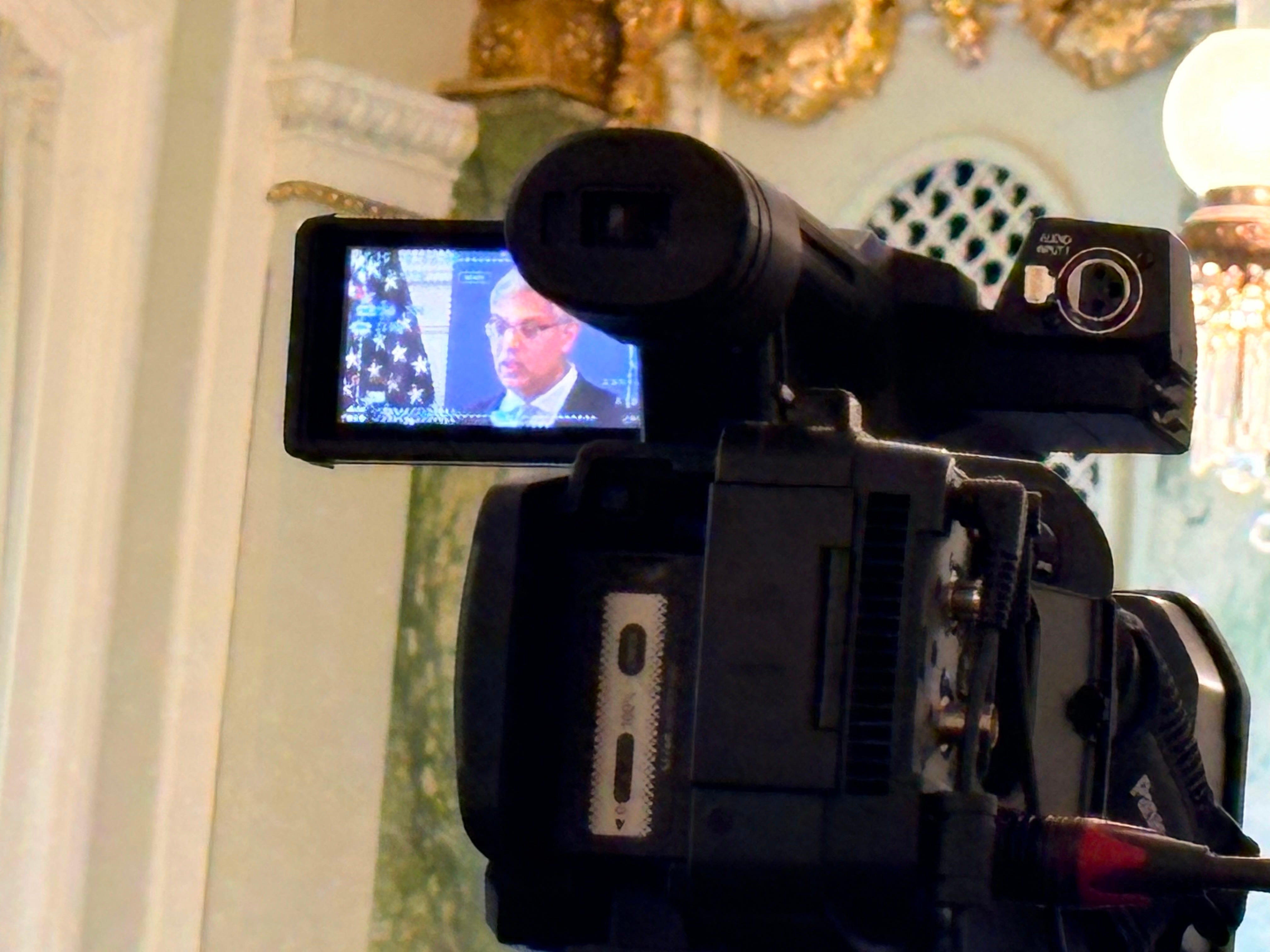
It’s also why I decided it was worth my time to cancel a day of work to sit in a ballroom of the iconic DC Willard hotel as Jay Bhattacharya and his leadership team laid out three specific reforms designed to fix this mess.
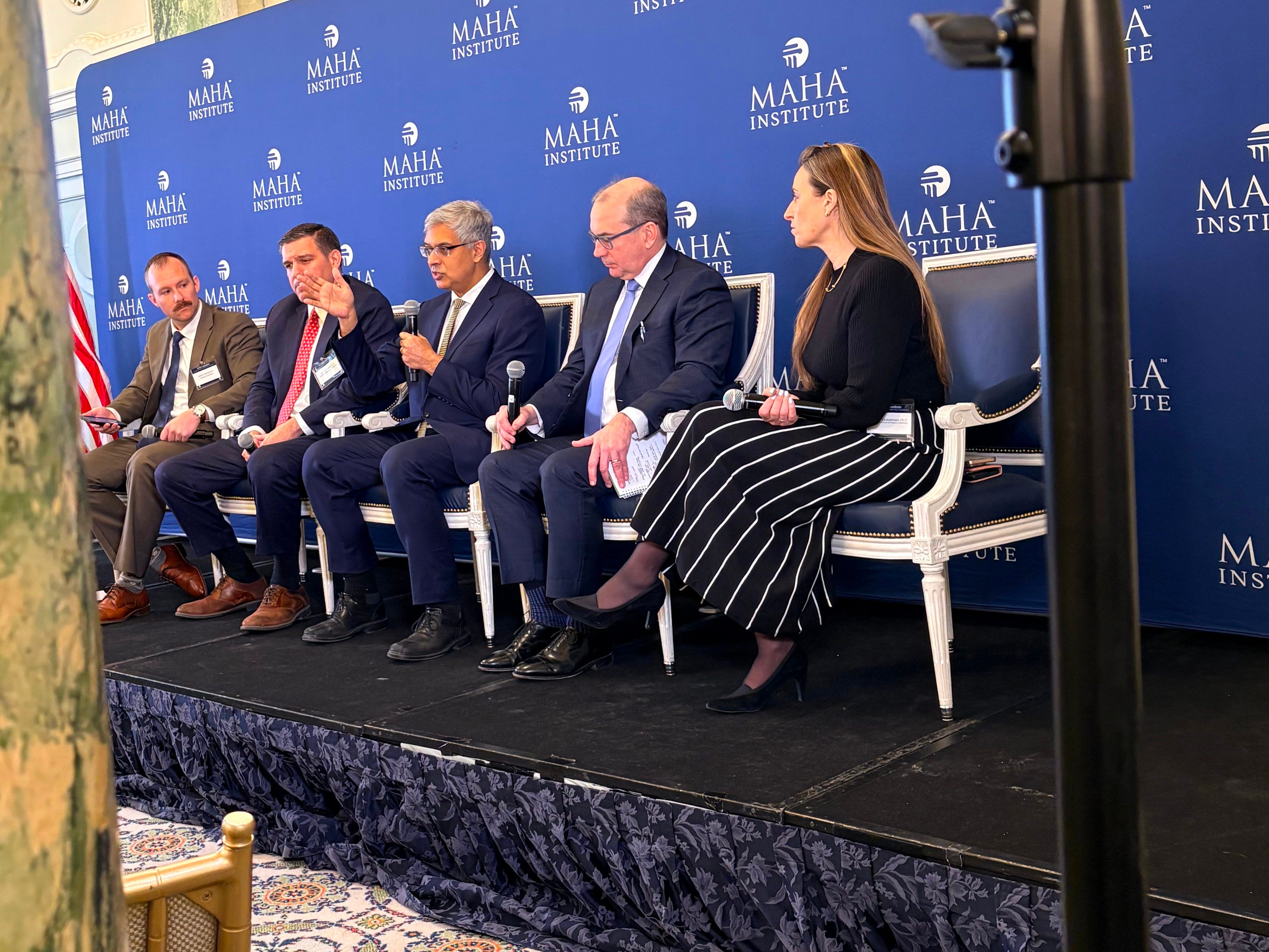
As I sat in that room, I couldn’t help but think through all of the falsehoods I’ve been told as a patient, as a mom, as well as those I was taught throughout my many years of study, and have shared with my own patients from a place of authority.
Screenings I swore saved lives (but don’t).
Diseases I said couldn’t be reversed (but can).
Medications I promised were necessary (but aren’t).
The confidence. The certainty I carried in my words. Because… well, science.
And it made me wonder how much pain and suffering has been caused by our reliance on a knowledge base built on studies that never replicated?
Which begs another question.
Who the heck is Jay Bhattacharya and why should you care anyway?
If you don’t know the name, you should.
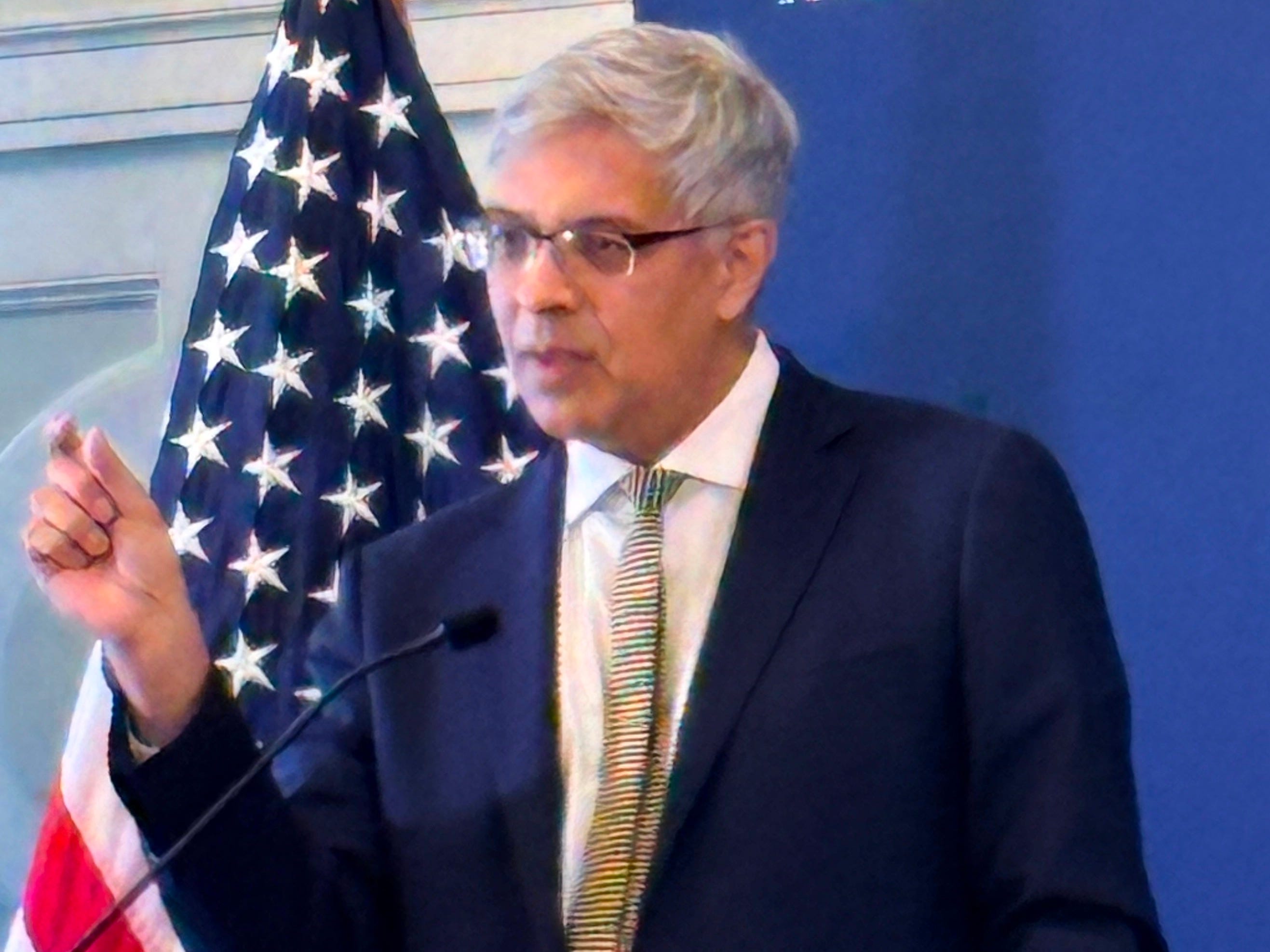
Bhattacharya is a Stanford health economist and epidemiologist who spent the last five years being called every name in the book for having the audacity to suggest that locking healthy people (especially children) in their homes might cause more harm than good.
In October 2020, he co-authored the Great Barrington Declaration with Martin Kulldorff and Sunetra Gupta. The declaration argued for “focused protection” - shield the vulnerable, let everyone else live their lives, build natural immunity in low-risk populations.
The response from the public health establishment was swift and vicious.
Francis Collins, then-director of NIH, called it a “fringe” position in an email to Anthony Fauci. He explicitly wrote they needed a 'quick and devastating takedown' of its premises.
Never mind that Bhattacharya’s credentials included a Stanford faculty position, an MD from Stanford, a PhD in economics, and decades of research on health policy and infectious disease epidemiology.
Never mind that history has vindicated pretty much everything in that declaration.
He was “fringe” because he disagreed with the approved narrative and he wouldn’t just shut up about it.
Fast forward to 2025. President Trump appoints Bhattacharya as NIH Director. And the same people who spent years calling him a dangerous conspiracy theorist are now watching him run the agency that tried to destroy his reputation.
And what’s he focused on? Not revenge. Not settling scores. (He made that crystal clear much to the dismay of many in attendance.)
Instead he’s locked in on: the replication crisis.
Bhattacharya shared his concern that we’ve built a scientific enterprise that rewards novelty over reliability.
“Researchers are incentivized to produce exciting findings, not reproducible ones. The result is a literature full of studies that look impressive on paper but fall apart when anyone tries to build on them.”
He’s not wrong.
Forget all the jargon and think about what that means practically.
Medical research operates on a foundational assumption: if a study gets published in a peer-reviewed journal, other scientists should be able to repeat the experiment and get similar results. That’s how science is supposed to work. You don’t just trust one team’s findings - you verify them.
Except we don’t. We cite them. We build on them. We develop drugs based on them. We write clinical guidelines from them. We tell patients with complete confidence that “the science shows...”
And nobody bothers to check.
Why the System Produces a Surprising Amount of Garbage
The incentive structure is perfectly designed to create unreliable research.
Researchers get hired, promoted, and funded based on publications. The more papers, the better. Novel findings get published. Negative and confirmatory studies don’t.
Nobody gets tenure for replicating someone else’s work and reporting “yep, it still works.” Nobody gets grant money for trying to repeat a study and finding it doesn’t hold up. Academic journals have zero interest in publishing negative results of any kind. Replication attempts don’t generate headlines.
Have you ever seen an article in the New York Times that says, “Different Group of Researchers Do Same Thing Other Guy Did and It Worked Again.”? Of course not. Because nobody reads that article. Nobody wins awards for it. It doesn’t drive impact factors. It doesn’t advance careers.
So researchers optimize for what gets rewarded: flashy, novel, positive findings.
The result? Publication bias. P-hacking (torturing data until it confesses). Outcome switching (reporting different results than you said you’d measure). Methodological sloppiness that goes undetected because nobody ever tries to replicate the work.
It’s not that most researchers are dishonest. It’s that they’re operating in a system that rewards speed and novelty over rigor and reproducibility.
Vinay Prasad, a hematologist-oncologist who is now serving as Chief Scientific and Medical Officer at FDA, spent years documenting these failures in cancer research. He’s written: 'We don't incentivize truth, we incentivize discovery.' Scientists have 'betrayed the social contract,' he argues - they're 'happy to swallow up billions of dollars in grants' but aren't 'fundamentally interested in whether or not they're delivering true results.'
He’s right. And Bhattacharya knows it.
What Actually Being Done About It
The reforms he announced in that beautiful ballroom are straightforward - almost embarrassingly basic:

First: Fund replication studies directly. NIH will allocate dedicated funding for researchers to replicate high-impact studies. Not new discoveries. Not novel findings. Just “let’s verify if this foundational research actually holds up.”
This matters because right now, there’s essentially no funding mechanism for replication work. If you’re a researcher and you want to repeat someone else’s study to confirm it, you’re doing it on your own time with your own resources. That’s not sustainable. Bhattacharya’s proposing to change the selection process to make replication a funded priority.
Second: Create publication venues for replication studies AND negative findings. Right now, if you try to replicate someone else’s study - whether it works or it doesn’t - there’s nowhere to publish that. And if your own hypothesis fails? Same problem. Journals reject both as “not interesting enough.” They “don’t advance the field.”
Bhattacharya’s pushing for dedicated journals and platforms that will publish replication attempts AND the experiments that didn’t work. Because if the only studies that get published are the ones where everything went right, the literature isn’t showing us reality and it’s nothing more than a highlight reel.
He put it this way, “I have a drawer full of hypotheses that failed. I should be able to publish them and put them in a journal somewhere.” Why? Because we learn from those studies too.
The goal is to make the literature actually reflect what happens when you DO science - not just the subset of experiments that confirmed exactly what the researcher hoped they would.
Third: Change how we measure research success. Stop evaluating researchers purely by publication count. Start giving them credit when other scientists think their work is important enough to replicate.
Right now, if someone wants to replicate your study, you view it as a threat. Bhattacharya wants to flip that: being worth replicating should be a career asset, a sign you did something significant enough to verify.
This is the reform that could genuinely transform the system. Right now, there’s zero downside to publishing flashy findings that don’t replicate. Your paper gets cited. You get promoted. By the time someone figures out your study doesn’t hold up, you’ve already moved on to the next grant.
But if being replicable becomes a metric of success - if transparency and rigor get rewarded in career advancement - the incentives shift entirely. Researchers will optimize for work that others can verify, not just work that sounds impressive.
These aren’t radical ideas. They’re embarrassingly basic principles of how science should work.
The fact that it took until now for NIH to implement them tells you everything about how completely broken the incentive structure has been.
This Matters Beyond Academic Journals
Every treatment your doctor recommends is based on research.
Every clinical guideline. Every standard of care. Every confident statement about what will or won’t help you.
If the underlying research doesn’t replicate, then what?
I think about the absolute confidence with which doctors speak. “The research is clear.” “The science says.” “We know with 100% certainty.”
How much of that certainty was built on studies that would fall apart the moment someone tried to repeat them?
How many patients have been told their treatment was “evidence-based” when the evidence was unreliable?
How many people have suffered through interventions that didn’t work because nobody bothered to check if the original study held up?
How many patients were gaslit when their lived experiences didn’t match what the research “clearly showed” - research that was never replicated?
The Irony That Keeps Me Entertained
What makes Bhattacharya’s appointment so perfect to me is that the same institution that tried to destroy his reputation for questioning COVID orthodoxy is now being led by him - and he’s using that position to address one of the fundamental problems that made COVID policy so disastrous in the first place.
The replication crisis isn’t separate from the COVID policy failures. It’s actually the same problem - too much hubris, too little questioning.
During COVID, we built public health policy on models that were never validated and studies that were never replicated. When people questioned the evidence, they were suppressed rather than engaged.
Vaccine effectiveness was overclaimed - officials stated vaccinated people wouldn’t get or spread COVID, people who questioned if that was accurate lost everything. Those claims were demonstrably wrong within months. But those who were punished didn't get their jobs or platforms back for being right. Fear and modeling drove policy without anyone checking if the assumptions held up in the real world. The negative effects on children & adults, touching every aspect of life, are still being counted.
Bhattacharya lived through this. He questioned the evidence behind lockdowns and was professionally attacked instead of scientifically engaged. He wasn’t alone. Those who questioned were censored, deplatformed, and professionally destroyed - often by the very institutions now admitting their claims were totally unreliable.
So watching him use his position to fix the underlying incentive structures that produce unreliable research is a special treat. Because he’s someone who understands exactly where the system was broken and has educated ideas on how to fix it.
Will It Work?
I don’t know.
Changing academic incentive structures is hard. Journals won’t want to publish negative findings. Researchers won’t want their work evaluated by whether it replicates. Universities won’t want to change tenure criteria.
There will be pushback. There will be excuses. There will be accusations of partisanship. There will be arguments that this approach stifles innovation or discourages risk-taking or makes research too conservative.
But here’s what is clear: the current system produces research that doesn’t replicate most of the time, and until now nobody with power was willing to fix it.
Bhattacharya is.
That’s where ‘better’ starts.
For the first time in my career, I’m watching someone in a position of authority acknowledge the problem and enact real solutions - not just better messaging or more funding, but actual structural reforms that address the broken incentive systems.
Will these reforms solve everything? No.
But they’re a hell of a lot better than what we’ve had for the last fifty years, which was basically: produce unreliable research, publish only positive findings, never check if anything replicates, attack anyone who questions it, then act shocked when the whole enterprise falls apart.
Maybe I’m naive. Maybe these reforms will get watered down or blocked or implemented so poorly they don’t matter.
But right now, watching someone who was professionally destroyed for questioning orthodoxy use his authority to fix the system that tried to destroy him?
I’ll take it.
It’s the first genuinely hopeful thing I’ve seen happen to institutional research science in a very long time.
And I pray it continues.

Listen to Jay’s recent NYT interview here:
Read Vinay’s article on the reproducibility crisis here:

This resonates! A lot of the public frustration wasn’t “people hate science,” it was people hate being asked to outsource their judgment while the incentives, uncertainty, and reversals stay hidden.
From a physician-scientist lens, I’d offer one distinction that helps keep the baby while draining the bathwater:
1. “Trust the science” is a slogan.
2. Science is a process: imperfect measurements, biased samples, p-hacking, publication bias, changing priors, and then (when we’re doing it right) correction.
When institutions communicate certainty where the data only supports probability, trust gets burned. And once that happens, people don’t become “anti-science”; they become anti-authority.
If we want to rebuild credibility, we need to normalize a few habits in public health/medicine:
1. Show the uncertainty (confidence intervals, absolute risk, denominators), not just headlines.
2. Separate evidence tiers (mechanistic plausibility ≠ observational associations ≠ randomized trials).
3. Say what would change our minds (pre-specified endpoints, replication, external validation).
4. Disclose incentives and conflicts plainly, without defensiveness.
I appreciate you pushing for epistemic humility here!
Husband and I eagerly watched Peter Robinson in every one of his chats with the great Dr. Jay, back in the horrid (horrid for those of us who knew that "this DEADLY disease" was a hoax) spring/summer of 2020. And I rememberalso their discussing their annoyance at being unable to get their hair cut! So dumb. So dumb, all those things forbidden.