



Remember when your doctor told you hormone replacement therapy would basically kill you? Well, funny story...
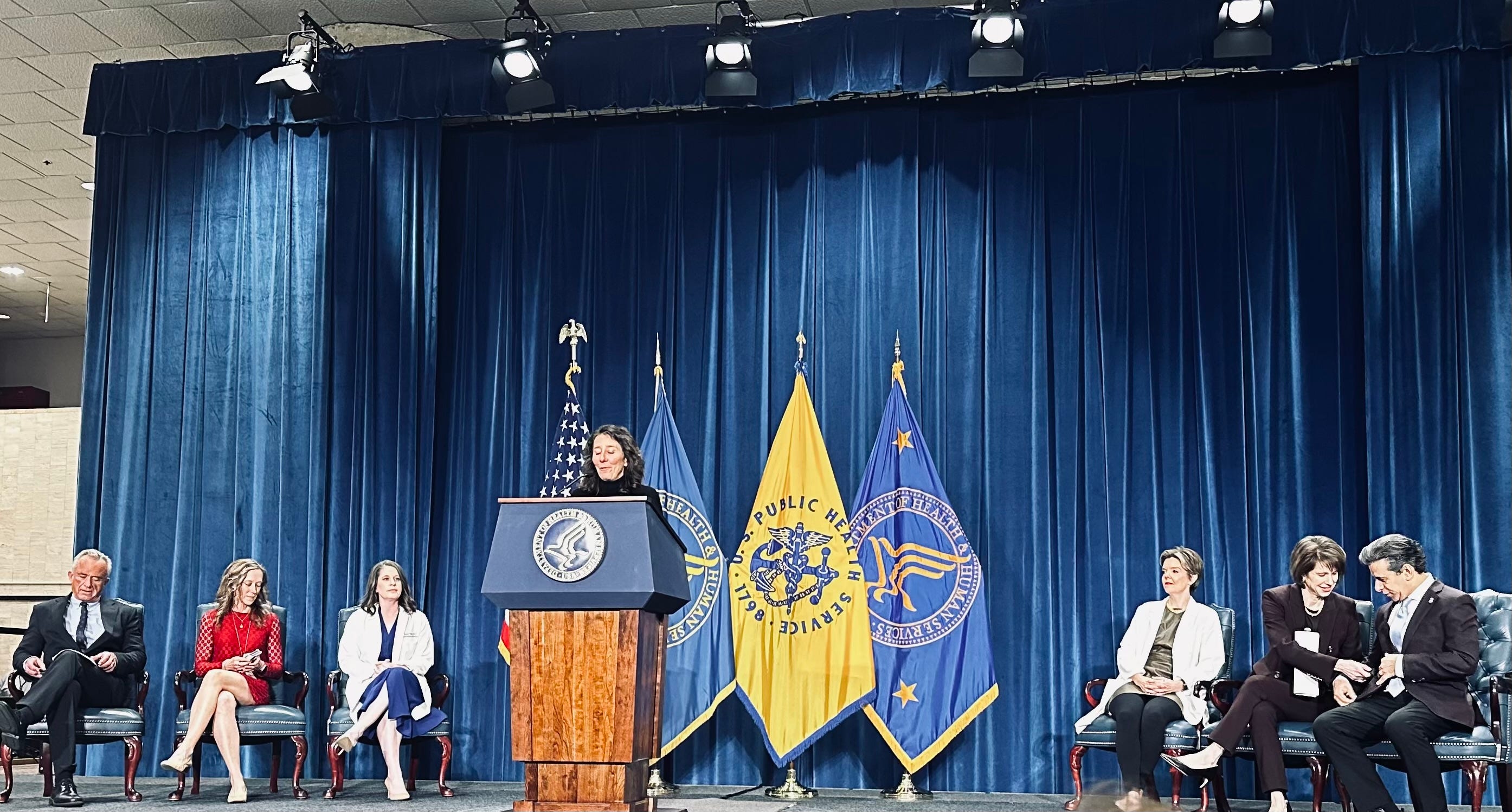
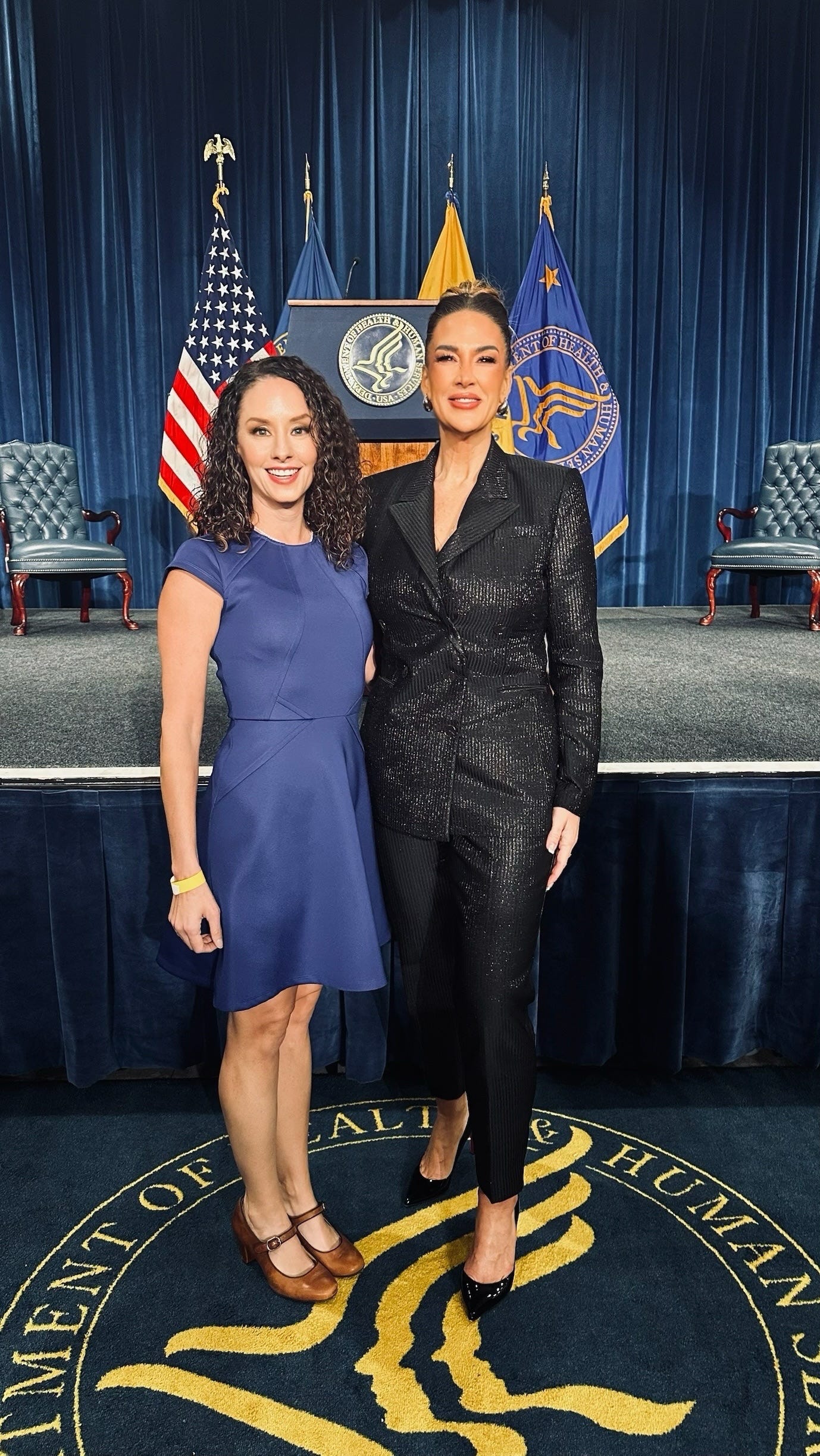
This week, HHS Secretary Robert F. Kennedy Jr. and FDA Commissioner Marty Makary stood up in front of hundreds of people (including Second Lady Usha Vance, actress/comedian Cheryl Hines, and ME there in blue 🥰) and said what amounted to:
“Oh, our bad. Turns out we’ve been wrong for 23 years.”
It’s not a direct quote.
But also... it’s pretty much spot on.
Here’s what happened.
In 2002, the Women’s Health Initiative published a study (and fueled a media frenzy) that made every woman in America throw her estrogen right in the trash.
The FDA slapped “black box warnings”- their nuclear option- on hormone replacement therapy sternly asserting very, very, VERY bad things would happen to naughty women who didn’t comply.
Prescriptions fell off a cliff. Millions white-knuckled their way through menopause because the alternative was death by breast cancer, obviously.
Except the study was garbage.
The women in the study averaged 63 years old- over a decade past typical menopause. They were given a hormone formulation nobody even uses anymore. And that terrifying breast cancer risk that made headlines?
Not statistically significant.
So... Read that again.
The finding that terrorized an entire generation of women into suffering through menopause in silence was not statistically significant. Which in science-speak means “we found nothing reliable here, folks - move along.”
A high school AP Stats student could have told you that when properly adjusted and interpreted this was noise, not signal. But the FDA staffing office was apparently running REALLY short on high school students with critical thinking skills in 2002.
Makary didn’t mince words in his recent CBS News interview: “It’s an American tragedy. I do think it’s one of the biggest mistakes in modern medicine.”
What the Data Actually Show (When You Bother to Read Them Correctly)
When you study the right population- women who start HRT within 10 years of menopause and before age 60- the numbers are absurd:
Reduced risk of all-cause mortality. As in, the risk you’ll die, from anything, is less. Period.
Up to 50% reduction in risk of cardiovascular disease. Heart disease is the number one killer of American women, by the way.
35% reduction in risk of Alzheimer’s disease. You know, the one that steals your mind before it kills you.
50-60% reduction in risk of bone fractures. Hip fractures end independence and often end lives.
Reduced depression. Increased happiness. Better quality of life.
These aren’t marginal benefits. These are the kind of numbers that would make Big Pharma billions if they could patent them under a name you can’t pronounce and then run adds of couples skipping through an apple orchard.
And YET for 2 decades, the FDA told women this treatment would kill them instead.
Makary put it plainly: “With the exception of vaccines or antibiotics, there’s no medication that can improve the health of women on a population level more than hormone replacement therapy.”
Cool, cool.
So we just... blackballed the most beneficial treatment for half the population based on statistical noise in the wrong age group and then didn’t talk about it for 23 years? Great work, everyone.
Of course, last time I checked MSNBC, they told me our current administration was ‘destroying trust in public health’ - but with ‘science’ like this, seems like there might be a little bit more to that story, but I digress…
The Human Cost (aka:how many of us suffered or died before the FDA admitted they screwed up?)
Makary told CBS News that “50 to 70 million women over the last 23 years have been denied the incredible, life-changing, life-saving benefits of hormone replacement therapy because of the dogma.”
It’s back-of-the-napkin math of course based on number of women 45-60 years old the last 23 years, number of prescriptions filled… it’s not exact, of course, but it’s pretty damn close.
Let that number sink in. 50 to 70 million women. Over 23 years.
Makary says his own mother was one of them. “She had gone through perimenopause right around that time, but was never offered this therapy,” even though she was a good candidate. “Well, she went on to have two different falls recently where she had bone fractures... And I can’t help but think if her bones had been stronger from hormone replacement therapy, she wouldn’t have gone through that.”
Interesting.
Of course, critics will screech, NO ONE KNOWS WHAT WOULD HAVE HAPPENED, and they’re totally right, but it could have made a difference and we will never know because the FDA lied.
To use the media’s favorite phrase… The FDA intentionally or incompetently “propagated misinformation” to both his mother and her doctor (and 50 million of their BFFs), so none of them ever had a real choice.
Even now, many people- including doctors- still believe HRT increases your risk of breast cancer and death.
In fact, it’s exactly what I was told in my OB/GYN rotations only 5 years ago, many years after the truth was out there, plain to see, in black and white.
I remember asking my preceptors specifically about the WHI study:
“It seems like this study didn’t actually show…”
Their response?
Anger. Annoyance. Frustration.
”SHUT UP STUDENT! Just comply.”
Okay, it was a little marginally nicer than that, but not much.
Dogma in medicine dominates evidence, and this misinformation is that deeply embedded.
This is what happens when one flawed study gets intentionally misinterpreted, publicized, and turned into policy. Medical societies fall in line. Doctors stop prescribing.
Nobody wants to be the first to say ‘well, we got this completely wrong.’
Makary paints a clear picture that clinicians who’ve observed women on HRT immediately recognize.
HRT has saved marriages, rescued women from depression, prevented children from going without a mother.
But for 23 years, we denied women access to it based on fear instead of data.
Hard to argue that his outrage is misplaced.
So let’s Catalog the Errors (Because Apparently We Need a List)
Wrong population. The WHI studied women averaging 63 years old. The average age of menopause is 52. If you want to know how HRT affects menopausal women, maybe study women actually going through menopause? The risk-benefit profile depends entirely on timing.
Not statistically significant. The breast cancer finding’s confidence interval crossed 1.0. That’s stats-speak for ‘we found nothing.’ The correct headline should have been ‘Study Finds No Significant Increase in Breast Cancer Risk.’ But instead, we got panic.
Wrong formulation. They studied medroxyprogesterone acetate, which nobody uses anymore. Then the FDA warned (and continued warning for 23 years) against all HRT formulations- bioidentical hormones, transdermal estrogen, different progestogens. Sort of like studying Vioxx, finding that it causes heart attacks and stroke and then telling the public that all pain-relievers and anti-inflammatories share the same degree of risk of heart attack and stroke, which is categorically untrue.
Never updated. For 23 years, better evidence accumulated. Age-stratified analyses showed benefits vastly outweighed risks in the right population. The WHI’s own follow-up showed the breast cancer signal disappeared. Multiple studies showed massive benefits.
The FDA could have issued age-specific guidance. They could have distinguished between formulation types. They could have mandated new trials.
Instead, they did nothing. Women kept suffering.
Why? Because institutions don’t admit mistakes. Because regulators optimize for not being blamed rather than improving patient outcomes. Because once bad policy hardens into dogma, it becomes nearly impossible to reverse- even when people are suffering.
Until now that is.
So What Actually Just Happened?
RFK Jr. didn’t mince words: “For more than two decades, bad science and bureaucratic inertia have resulted in women and physicians having an incomplete view of HRT. We are returning to evidence-based medicine and giving women control over their health again.”
And they should. It’s long overdue.
The FDA is removing black box warnings from estrogen-containing HRT products.
They’re keeping the endometrial cancer warning for estrogen-alone products, which actually makes sense. They’re also approving the first generic Premarin in 30 years and a new non-hormonal option for women who can’t or don’t want hormone therapy.
The new recommendation? Start HRT within 10 years of menopause onset or before age 60. After 60, blood vessels have likely already hardened, raising stroke and heart attack risk.
Do women have to take it? No.
But now they have access to factual data and can weigh the risks and benefits for themselves.
That is what I want my tax-dollars going towards- not gaslighting women and their doctors into choosing harm.
It’s amazing news. I’m so grateful.
This is how it should have been done from the beginning. Age-specific recommendations. Individualized risk-benefit analysis. Not blanket warnings based on garbage data from the wrong population.
Why This Matters Beyond Menopause
The HRT disaster isn’t just about ‘hot flashes’ or women. It’s a case study in everything broken in medical regulation.
We over-interpret single studies. We apply findings from wrong populations to everyone. We prioritize theoretical risks over actual harms. And once a position becomes dogma, we refuse to update it- even when the evidence says… We. Are. Killing. People.
This is the same regulatory mindset that caused patients to die alone in hospitals holding iPads in 2020, that wrecked the economy and caused a generation of kids to completely lose their way due to lockdowns and bad COVID policy.
The pattern is consistent: Overreact to theoretical harms. Ignore actual harms. Never admit mistakes.
It’s unacceptable.
But if this week is a foreshadowing of what’s to come, there’s hope… well at least, if anyone pays attention.
Change is hard and communication is always the limiting factor.
So how do we do it?
Well, I have ideas of course, but I want to know what was on their mind, so I asked.
The Bottom Line
Makary framed it correctly: “Look, I’m a regulator. I don’t want to tell people what to take. And I’m not prescribing anything. But we want people to have the right information. And part of that is addressing this fear-machine that has been going on for 23 years.”
I couldn’t ask for better than this.
Women and their doctors should make decisions based on real data, not decades-old panic.
The fact that it took a pandemic, a new administration and outsider appointees to fix this tells you everything you need to know about how broken medical regulation really is.
Medicine is supposed to help people. For 23 years on HRT, we did the opposite.
At least now (finally) we’re admitting it.
Until next time,
Tiffany

If you are enjoying signal and noise, please give us a ‘like’ to make it easier for others to find us, or you can just share with people who might enjoy it directly!
*edited for clarification.
Benefits listed refer to an individual’s risk of developing disease.
Here’s the language direct from the FDA fact sheet: “Studies have provided evidence that starting HRT within ten years of the onset of menopause can have numerous benefits which for most women outweigh potential risks. Benefits include a reduced risk of all-cause mortality and fractures. HRT has also been associated with 50% reduction in heart attack risk, 64% reduction in cognitive decline, and 35% lower risk of Alzheimer’s.”
https://www.hhs.gov/press-room/fact-sheet-fda-initiates-removal-of-black-box-warnings-from-menopausal-hormone-replacement-therapy-products.html
This is a great example of how understanding of things needs to evolve over time. The minute someone says "the science is settled" is the minute science actually stops happening. Real experts understand this. Great article, Tiffany !!!
Love the photos and video too. Awesome question!