



27 pounds.
That’s apparently that’s what I gained while I wasn’t paying attention.
I didn’t think it would ever happen to me. I had an exercise science degree, medical training, and a decade of professional cheerleading on my resume. Not to mention I am the owner of a comprehensive list of strong, self-righteous opinions about how to fix the health of every other man, woman, and child in America. So I was immune, right?
(This is not my proudest moment.)
The scales actually fell from my eyes while I was changing into my swimsuit in front of my daughter a few months ago. Mundane, of course - I’ve done it a thousand times without thinking twice. But that day at the lake, for whatever reason, it was different. My face got all red, and I wanted to melt.
After months (maybe years) of denial, I looked at myself, (like really looked), and I saw what was real. And I’m not even really talking about my body, but more so about the huge chasm between what I preach and the way I was actually living my life from day to day.
At first glance my writing appears to be about health policy, but essentially it’s more about agency and personal responsibility. About refusing to outsource your health to a system that profits from your decline. I actually get paid to stand on stages and give interviews where I tell others that “no one is coming to save you.” That you become exactly what your daily decisions produce, and if you choose poorly, you become easier to exploit.
And boy, do you.
So there I stood in the changing room - displaying the evidence of countless cocktail parties, late-night work outings, sky-high cortisol, travel, and brunches right there on my body, plain as day, in front of the person who’d been studying me most closely for the past two decades.
Your kids learn from what you DO, not what you say. And suddenly I realized the message I was sending my child was that she could be a hypocrite too.
After I saw it, I couldn’t unsee it and things had to change -immediately. No waiting for the holidays to pass or for work to slow down.
I joined a gym and vowed to clean up my diet that week.
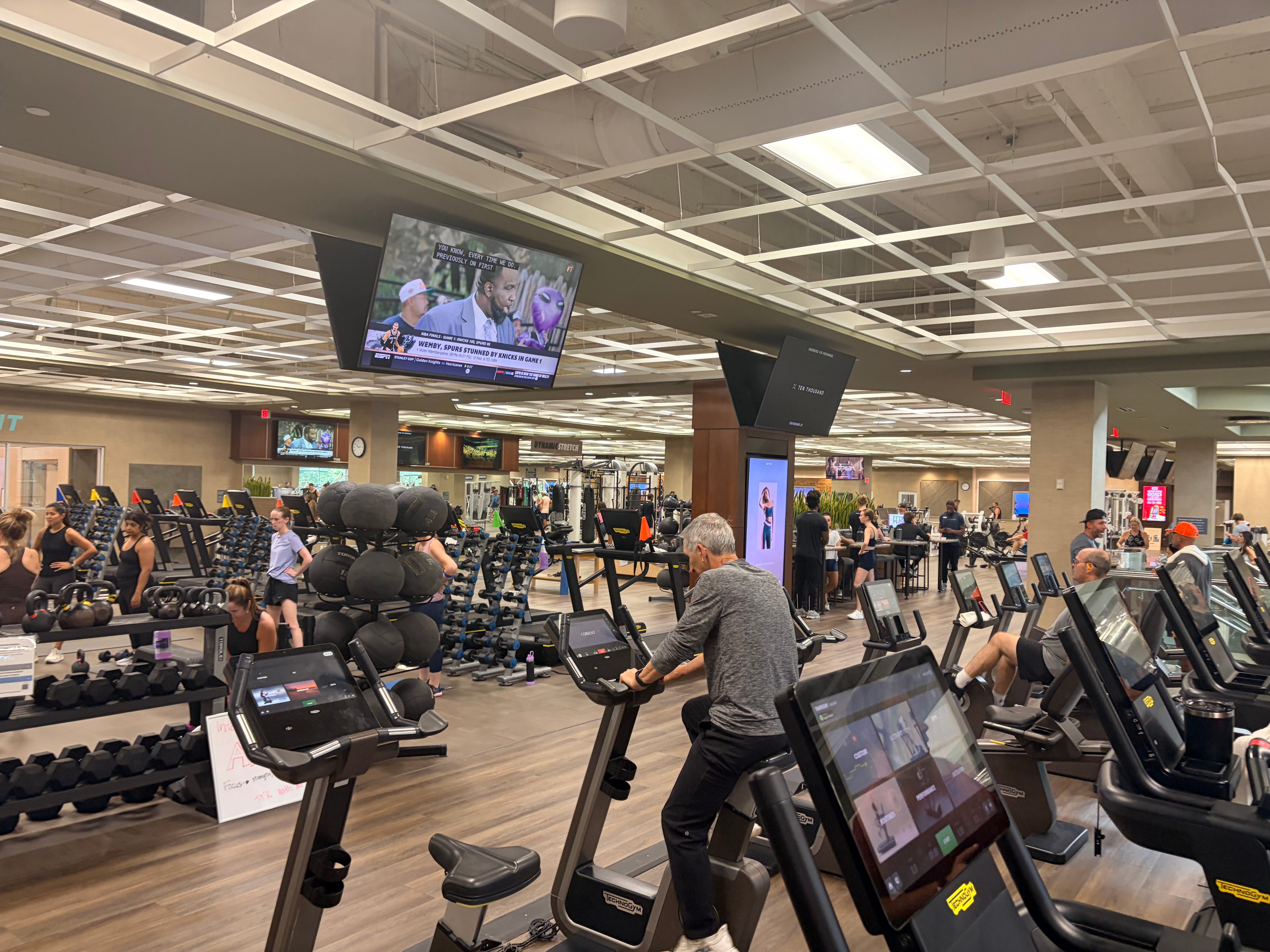
And that’s how I found myself standing on a scale for the first time in longer than I’ll admit in print. (Because pointing fingers at the FDA doesn’t leave much time to check in on your own issues.) But, it wasn’t a “scale” exactly - it was more of a fancy body composition analyzer called an InBody. And it was parked horrifically right smack in the middle of the weights floor.
I was NOT emotionally prepared for anything the InBody had to report.
For years I’d blamed my expanding muffin top on my “special time of the month,” or the glyphosate-smothered wheat that was slowing my digestion, or long overnight shifts in the ER, or the evils of politics and mainstream media that forced me to spend all of my free time fighting the system. I was in total victim mode - willing to blame literally anything but the shift in my own commitments to myself.
I got really good at making excuses. So on the rare occasions I did step on a scale, the number was never “real” to me anyway. Because, I was in my luteal phase, or I’d had too much salt, or, I don’t know… something.
But the InBody, in all its judgy judgment, reported the impossible: I weighed more than I ever had in my non-pregnant life. Almost as much as when I delivered my daughters. And more than I weighed on the drive home from the hospital with a newborn in the back seat. Both times.
I was mortified. (I still am, actually.)
Not about my body or the weight, but about how I had built an entire life and career around knowing how to manage this exact situation, with no knowledge gap and no (real) shortage of time, energy, or resources, and yet - I let it happen anyway.
A lot of us do.
Mostly because I think no one actually gains 27 pounds. You gain 1 pound, 27 times and you lie to yourself about what’s happening.

But part of me knew. You always know.
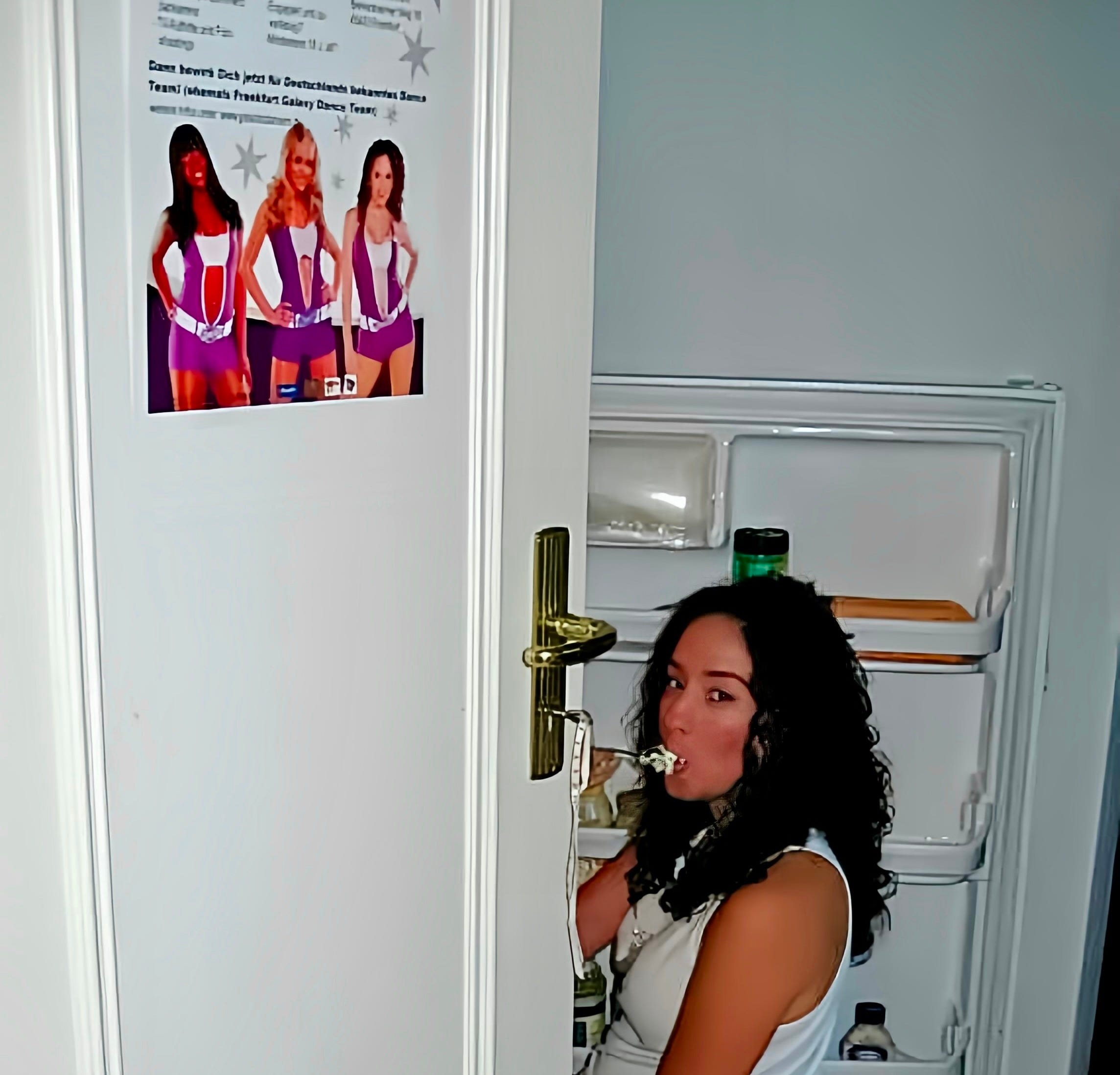
I knew when someone sent me this photo (above) and I didn’t post it because it “didn’t look like me.”
I knew when “I’m just not in the mood for jeans” appeared out of nowhere, then slowly took over my off-duty personality.
I knew when I started wearing blazers to events that didn’t really call for blazers, because a jacket hides a lot.
I especially knew when my girls started borrowing amazing things from my closet that previously I thought they had no business touching, let alone wearing - and I let them, because some part of me had already given up.
I told myself I’d do something about my habits and my health after life got less life-y. Even though a lifetime of paying attention had taught me that life never gets less life-y.
And as I stood there staring at the number, I finally understood that I was committed to weighing exactly what I weighed in that moment. I hadn’t “wanted” it - but my calendar and my love for pinot grigio combined with key lime pie had produced exactly what I was observing.
This was what I was committed to. This had been my choice.
I could argue that my hormones, my insulin resistance, my anxiety, and my environment made me do it (and there’s real truth in those stories), but then what? I would stay a victim. And how can you change what you don’t even control?
It had been my choice. And I would now choose differently.
Your doctor is not coming to the rescue.
Twenty years ago I was an overweight young military wife with a toddler in tow, dealing with PCOS, prediabetes, and a grocery budget that didn’t really cover groceries. And when I asked what I could do about these new diseases, my doctor shrugged.
The medical consensus at the time was essentially: “Bless your heart, here’s some drugs - hope you have good insurance. You’re gonna need it.”
No one ever told me that the way I was living my life might be contributing to my health issues. No one suggested I could do anything about it myself.
When I did finally decide the weight had to come off, it was so I could make the team, not heal myself, but only because I never imagined that healing myself was even possible, because if it were - wouldn’t Hopkins have told me?
I also had no idea how I’d do any of it. I just knew that I had to, and that I would.
So I read and experimented. And I failed. Then I failed more. I asked everyone who would talk to me who knew anything about how to get fit - and they helped. What finally worked for me was not-so-moderate: two-hour workouts twice a day, six days a week, eggs, canned tuna, canned chicken, chicken breasts, protein bars, and black coffee.
I lost 25 pounds in three months. Built a ton of muscle. Then made it through a grueling months-long audition process (and to the final round of the Ravens and the Redskins) before accepting my place in DC.

But something else happened. In spite of the medical system’s insistence that my recent diagnoses were “a lifelong sentence,” I accidentally reversed the “incurable” PCOS and prediabetes. They were gone, and I’d done it all by mistake, all by myself - a poor kid from middle-of-nowhere Louisiana.
And that moment changed everything in my life.
Although it was just a blip in the matrix, it was the moment the system tipped its hand. I never again believed that medicine was infallible or that “doctor knows best.” It was proof that nobody was coming to save me - not medicine, not a guru, not a program, not a drug. And that if I didn’t want to end up somewhere I didn’t want to be, I’d better do something different.
And that lesson stuck with me - as a mom, in the ER, in DC, in everything I write until - I could no longer see it.
You can’t fix what you don’t see, and I was blind.
What I think I know. And what I don’t.
Everything past this point is what I’m using to recover my body and my integrity. It’s the result of pattern recognition gained over twenty years in health and medicine - from doing this work first on myself, then running clinical research with Johns Hopkins (which is ironic, I know), directing a multi-state rollout of the CDC’s Diabetes Prevention Program (perhaps also a little ironic), and counseling patients in the ER.
It’s not a prescription, but just my way of thinking. And it’s certainly not gospel.
(If you want commandments, I suggest you ask God. I can’t help there.)
Non-commandment #1: Diet does the work. Exercise does the magic.

Almost everyone attempting to change falls into the same trap: trying to exercise their way out of what’s on their plate.
We all do this even though we know it doesn’t work.
But the math just doesn’t math. It takes about an hour of hard training to burn what you can eat, standing at the kitchen counter, in like ninety seconds. Nobody outruns their mouth. So if the weight has to come off, the food is where it happens.
But it’s not easy.
Largely because the companies that perfected cigarette addiction bought the American pantry in the 1980s and pointed all their craving science directly at you. And since that time, the fork has not really been a fair fight.
But if all of that’s true, then why bother with the gym at all?
Because diet is nothing but restriction. It’s just a list of “no’s”, all day long. And I’m not sure anyone can live happily on just “no” all the time. You need to DO something, and exercise is the thing you can DO. So while the pounds slowly move out, you can build what’s underneath - actively. And of course, both changes work together to make you healthier.
So the TL;DR is that diet changes make you smaller. Exercise makes you happier and hot.

Non-commandment #2: When you eat matters as much as what.
You mostly already know what to eat. You probably learned it from your grandparents. Stuff that is real is better than stuff that is fake. Stuff that has less sugar is better than stuff that has more. Less booze is better than too much. Just the basic stuff.
The lever that you may have never pulled is timing.
Dr. Jason Fung, the nephrologist (that’s a kidney doctor) who wrote The Obesity Code, has spent his career treating patients with type 2 diabetes, and his argument reorganized how I think about all of this. He argues that we’ve been so fixated on the plate, that we never look at the clock. And the clock really matters.
Every time you eat, insulin rises. Insulin is the hormone that tells your body to store instead of burn. So how clean your food is only answers half the equation. The other half is how often you’re sending that store signal. Eat six times a day, enjoy fat-free food (you remember Skittles are a fat-free food), and you never once let insulin fall low enough for your body to reach for its own fat. You can eat “perfectly” and still keep the “burn” door locked all day long.
This is why “six small meals to stoke your metabolism” might just be the worst mainstream advice of the last thirty years, and why the single change that has moved the needle most for me, every time I’ve needed it, has been building in these boring stretches with nothing on my plate at all.
But of course no one makes money from you consuming less - not the pharmaceutical industry, not the hospitals, not Big Food - so we don’t really talk about this concept much.
It’s worth asking yourself: how many hours a day is my body actually allowed to burn anything?
If the answer is “almost none,” you found a lever you can pull.
Non-commandment #3: The same timing concept applies to movement, in reverse.
Your muscles pull sugar out of your blood while you move. Frequent movement affects your body differently than one single sustained session does. And the effect is strongest right after you eat.
For example, a ten-minute walk after each meal may control blood sugar better than one long 1/2 hour gym session in the morning.
I’m not saying that you shouldn’t do the 90-minute heavy lift (if that’s working for you, please continue). I’m just saying the quick walks after meals might be the most bang for your buck for your metabolism. I try to fit in a variety of activities throughout the day in addition to my formal workout.
It’s worth asking yourself: how long did I sit today? How long did I sit after eating? For most of us, the answer unfortunately is… “until the next meal.”
(Sigh)
Non-commandment #4: It’s going to take more than feels fair. Plan on it.
What’s required to get fit is way bigger than you want. The timeline is longer than you’d like. The workouts are more frequent, the weights are heavier, the walks are longer. The cheat meals are very few and far between.
It often looks like a complete overhaul of your life with more of everything at once.
Plus, when you lose weight, your body fights to get it back. Metabolism slows. Hunger hormones climb. The drive to move drops - you fidget less, you take the elevator, and you don’t even notice you’re doing it. Your body treats weight loss as a threat, because for most of human history, losing weight quickly meant trouble.
Again, Dr. Fung has some great ideas on how to minimize this effect in his books.
But the reality is that some weeks you’ll do everything right and you will get nothing back, and you’ll start wondering what’s wrong with you. Nothing is wrong with you. Your body is doing exactly what it was built to do.
Expect that fight and keep going.
Non-commandment #5: Losing is a sprint. But keeping it is a walk.
The intensity of getting fit is not particularly sustainable. But it doesn’t have to be.
Losing weight and maintaining weight are two different activities with different rules, and people fail because they play one with the other’s rules. The same is true with building muscle and maintaining it.
The woman who made that cheerleading team - with the two-a-days, the canned tuna, the whole shebang - was not doing something sustainable. It was never supposed to be. It was a sprint, with a finish line I could see.
People often get this wrong in both directions. Some expect gentle, sustainable habits to deliver dramatic results really quickly. Others get the results and then think they have to keep the brutal sprint going forever.
So decide, up front, what your goal is. Which one are you doing?
If you’re trying to lose, you’re allowed to do more than is sustainable long-term, because you’re not going to be doing it forever. If you’re maintaining, maybe that cheat meal actually IS aligned with your goals.
That permission is the part almost nobody gives themselves.
Non-commandment #6: Shrink the horizon. You only have to win this week.
A goal like “lose 27 pounds” is too big to wrap your arms around. You will never get out of bed at five in the morning for a number that far away.
So make it small enough to touch. (Could I lose a pound this week? Could I do one or two more reps next week than I did this week? Could I log my food for the next seven days?)
Whatever the goal is, make sure it’s achievable and measurable over a tiny timeline. And decide, in advance, what you’ll do if you hit goal and what you’ll do if you don’t.
A plan for a small adjustment helps morale survive the weigh-in: so maybe a long walk to support your progress, a skipped glass of wine with dinner, or finally trying your coffee without a packet of sweetness. Knowing what you’ll do if you don’t quite hit it, gives you a plan to move forward.
If it’s weight loss, know the number. Picture Friday’s weigh-in before it happens. Then run every decision through one question, all day long… Does this serve Friday’s weigh-in? The wine, the second helping, the skipped walk - does it serve Friday, yes or no.
It’s a small enough question that you can actually answer it, and small enough that you can actually win it. And the 27 takes care of itself while you’re busy winning weeks.
Non-commandment #7: You will have to adjust. Plan on that too.
Even if you are hitting goal week after week, what works today will eventually stop working.
You’ll hit a week where the plan produces nothing, or life detonates, or your body just shifts underneath you. When that happens, you don’t blow it up and quit. You just adjust, and you keep going.
Because the real skill here was always calibration. The ability to adjust fluidly. The people who win are never the ones who found “the perfect plan.” They’re the ones who keep adjusting instead of quitting.
Which is super annoying, but it’s also true.
So here’s MY plan.
Last time I did this, my life looked completely different. I had a toddler at home and a built-in support network.
I’d meet my friends at the gym and lift heavy from 5 to 7 every morning before a 5-credit-hour physics lecture at 8. Then spend afternoons at the park with my daughter, and back to the gym or the trails for another couple of hours in the evening.
I lost 1-2 pounds a week and added muscle the whole time. (I also missed way too many moments with my kid.)
That version of the plan is never coming back.
My life is different now. So is my body. I’m carrying a lot more muscle than when I started this journey in my early twenties, but it’s also much harder to add more, and change happens slower than it used to.
The motivation is different too. Twenty years ago I was committed to an audition date and therefore fine just white-knuckling it through the day. But now, I’m engaged in work that I love and projects that require deep thinking and attention. There is no timeline, and I’m just not willing to be that miserable.
So now I’m leaning into the example I want to set for my kiddos, the spiritual benefits I’ve found through fasting and prayer, and the radical acceptance that I am 27 pounds heavier because that is what I’ve been committed to - because that is what is.
Every item on the list below fuels me instead of draining me. Things that feel invigorating in this phase of my life made the cut, and things that take energy just to endure it - didn’t.
Specifically, here’s what I’ve been doing the past 4 weeks.
Weekdays: A power hour of work from 4 to 5am. (Otherwise I’m too attached to my phone and my running list of ongoing projects to actually focus on my workout. Know thyself.)
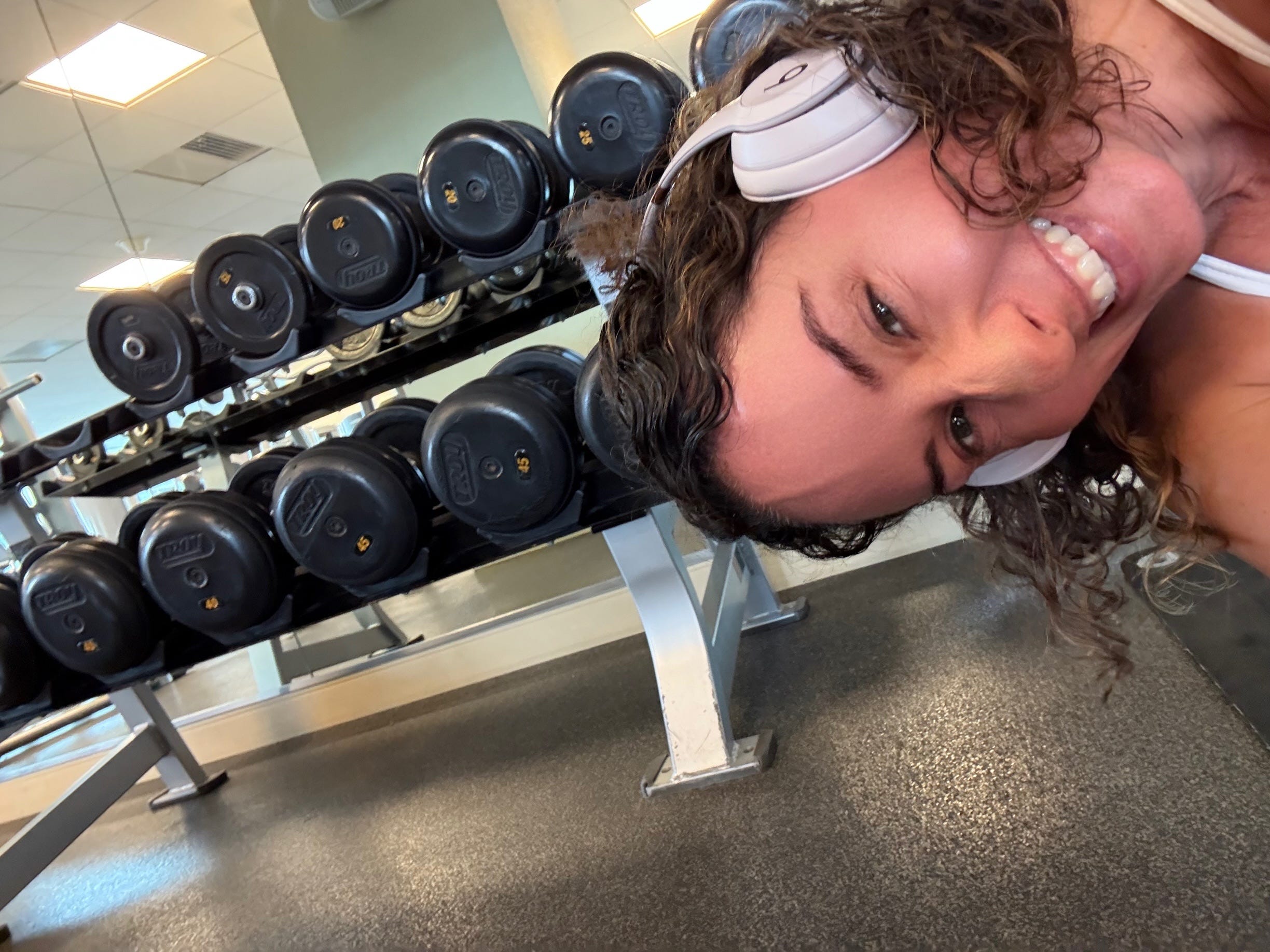
Lift heavy and stretch, 5 to 7am. I do a rotation of: Legs, Pull, Shoulders, Push & Glutes.
Then I shower, breakfast, ready to start the day by 8. I say no to meetings before noon (if I can help it) and I protect those hours for the work that requires more intense focus.
Lunchtime: Some movement of any flavor: a 7-minute workout from my 7-minute workout app, a quick 20-minute swim, or a 20-minute walk.
Evenings: I would love to fit in a movement block, but I haven’t figured out how to make it work yet, so I’m not.
Weekends: I’m trying to plan more active fun. Hikes, swimming, bike rides, walking - movement that doesn’t feel like work. I’m also capping my work time at 4 hours on Saturday and Sunday mornings, because the calendar is sort of where this whole thing went sideways the first time.
Food: My body does better on a lower-carb plan. When I eat higher carb, I find myself craving cookies, cupcakes, cannolis and booze. When I stay low carb, those cravings just don’t show up and that just feels better - so I’m going with that.
My typical menu looks like this.
Breakfast: Chicken meatballs + 3 eggs, coffee with heavy cream.
Lunch: Nutella-flavored protein (Transparent Labs, sweetened with stevia), PB2, and half a banana.
Dinner: Beef, salmon, or chicken and a veggie - any veggie, sometimes even the starchy ones like corn or squash.
Fasts: I’m also doing at least one 36-hour fast a week, on purpose. For me it looks like: eat dinner Saturday night, stop eating by 7pm. Fast and pray on Sunday. Eat breakfast Monday morning at 7am. Done.
I’ve come to lean on the stillness of those fasts instead of “enduring” them. That’s new for me too.
And that’s it. That’s my plan.
I’m not suggesting you do any of this - at all. I’m just telling you what I’m doing. And in between my other health and health policy writings, I’ll keep telling you what I’m doing - posting updates as I go, on what’s working, what isn’t, and what I’ve had to change to continue progressing.
Some of this plan won’t survive contact with real life, and that’s exactly how it’s supposed to work.
Final thoughts.
I don’t know how long it will take to get where I want to be.
My body has certainly responded favorably to these changes. Although some days it feels like it really hasn’t changed much.
But I am already different on the inside. So very much.
I feel proud of myself again. I feel in alignment with my integrity. I feel like a woman who does what she says. I feel peace. And that’s huge.
The change I wanted was never just a number on the scale. It was returning to the person my daughters can look up to. The one they’d want to emulate. Someone who lives what she preaches.
That’s the ultimate goal, and I’ve already achieved that.
I hope some of this resonated with you, and that you take what helps and ignore what doesn’t.
Until next time -
Love the author written audio, Tiffany! Makes sense articles like this so convenient for me to enjoy:)
I “love” the audible version, as well. I love hearing my sister’s sound advice, in her beautiful voice. I love hearing the dedication used to achieve the goal, and I also know that you are killing it. You believed you could, and so you did. I see you, and I know my nieces do, as well. You are showing them that “I Think I Can” is more than a children’s story book we were given. You are showing them what it looks like to walk it out, literally. I couldn’t be more proud of the woman you’ve become. I know they’re proud of their Mom. I love you!